Many people buying a speaker for the first time will look at power, size, battery life, or even lighting effects.
All of these matter. But if you really want to understand how a speaker sounds, there are three key concepts you cannot ignore:
Bass, treble, and soundstage.
These terms are not meant to make listening more complicated. Quite the opposite. Once you understand them, many questions—such as why some speakers remain more enjoyable over long listening sessions—become much easier to explain.
Many people think of bass simply as whether it sounds powerful enough or delivers enough impact.
In fact, this is one of the easiest aspects of sound to misjudge.
Good bass should have depth and sufficient presence, but more importantly, it needs to be well controlled.
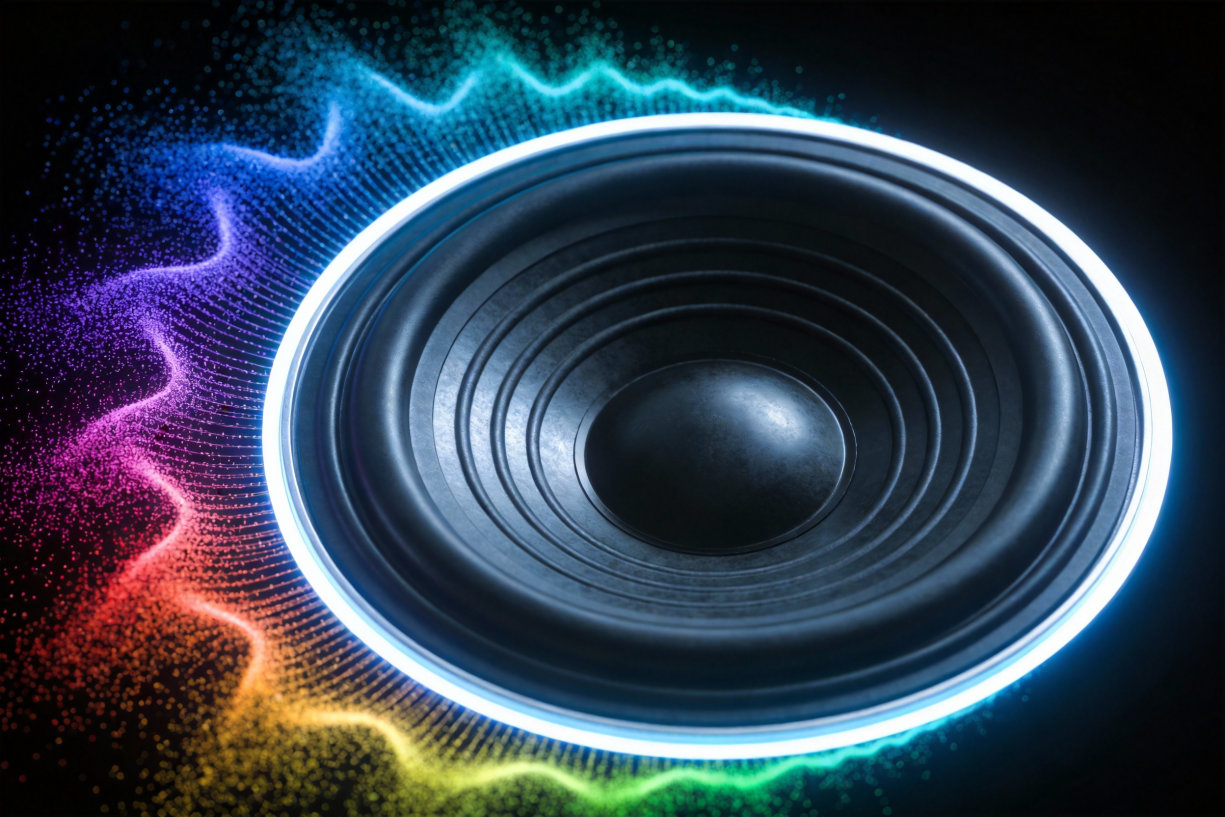
If bass has plenty of quantity but lacks control, the common results are:
Vocals become masked, drum beats linger too long, and the overall sound can feel muddy and tiring over time.
Truly good bass should deliver power when the music calls for it—and stop cleanly when it should.
That is why bass performance depends on more than just driver size and amplifier power. Enclosure design, driver matching, amplifier control, and DSP tuning all play important roles.
In simple terms:
Great bass is not about having more of it. The real challenge is making it clean, controlled, and well-defined.
Treble may not attract as much immediate attention as bass, but it directly affects how clear and open the sound feels.
For example:
Do cymbals have a natural sense of air?
Do female vocals sound clear without harsh sibilance?
Can you hear the finer details of string instruments?
All of these are closely related to treble performance.
Some speakers emphasize the treble to create a brighter, more impressive first listen.
At first, this may sound exceptionally clear, but over time, overly emphasized treble can easily lead to listening fatigue.

Mature, well-tuned treble should achieve:
Detail without sharpness; brightness without harshness.
That is why clarity and long-term listening comfort are not contradictory.
Soundstage is one of the most easily overlooked aspects of speaker performance among everyday listeners, yet its impact on the actual listening experience is highly noticeable.
Put simply:
Soundstage describes how sound spreads and expands within a space.
With a speaker that produces a good soundstage, it does not feel as though all the sound is coming from a single point.
Instead, you can perceive:
Vocals in a defined position,
instruments with a sense of depth and separation,
and music that opens up naturally across the listening space.
With a narrow soundstage, however, different elements can easily feel crowded together, even when the volume is high.

Many factors influence soundstage, including:
Driver configuration, enclosure design, crossover design, speaker placement, and room reflections.
That is why two speakers with similar specifications can sound completely different in actual listening.
Among these three key concepts, the most important question is not which one is “stronger.”
It is balance.
Too much bass can mask the midrange and treble;
Treble that is too bright can reduce long-term listening comfort;
A wide soundstage without stable imaging can make the overall presentation feel unfocused.
That is why the real challenge in designing and tuning a mature speaker lies in:
Achieving balance across different frequency ranges and creating a coherent overall sound presentation within the listening space.

This is also one of the principles DIPAOER has consistently emphasized in product tuning:
Rather than pursuing a single impressive specification, we focus on achieving a more balanced and appropriate sound performance for products of different sizes and power levels, based on their intended usage scenarios.
The next time you listen to a speaker, instead of only asking:
“How many watts is it?”
Try listening for three things:
Does the bass have power without lingering? Does the treble reveal detail without sounding harsh? Does the sound open up naturally into the space?
Once you understand these three aspects, your judgment of a speaker will no longer be limited to what you see on a specification sheet.

Copyright © Guangzhou Xinyang Electronic Technology Development Co., Ltd. All Rights Reserved. 粤ICP备2025507395号 Sitemap XML DIPAOER