There was a time when what we expected from a speaker was actually quite simple.
Turn it on, connect it to a phone, and play some music. If it was loud enough and sounded good, it had done its job.
But when we look at home entertainment today, one clear change stands out: what we need is no longer just a way to listen to music, but an experience that allows more people to participate together.
A family singing a few songs together, friends gathering at home, children watching videos on a screen, or music playing in the backyard on the weekend—these scenarios may seem different, but they all point to the same trend:
Home entertainment is evolving from simply “playing content” to “shared participation.”
And speakers are evolving along with it.
The role of a traditional speaker was straightforward: the audio source provided the content, while the speaker reproduced the sound.
For a long time, speakers were therefore evaluated mainly by acoustic specifications such as power output, frequency response, driver configuration, distortion, and sound pressure level.
These factors are certainly important, and even today, they remain the foundation of a good speaker.
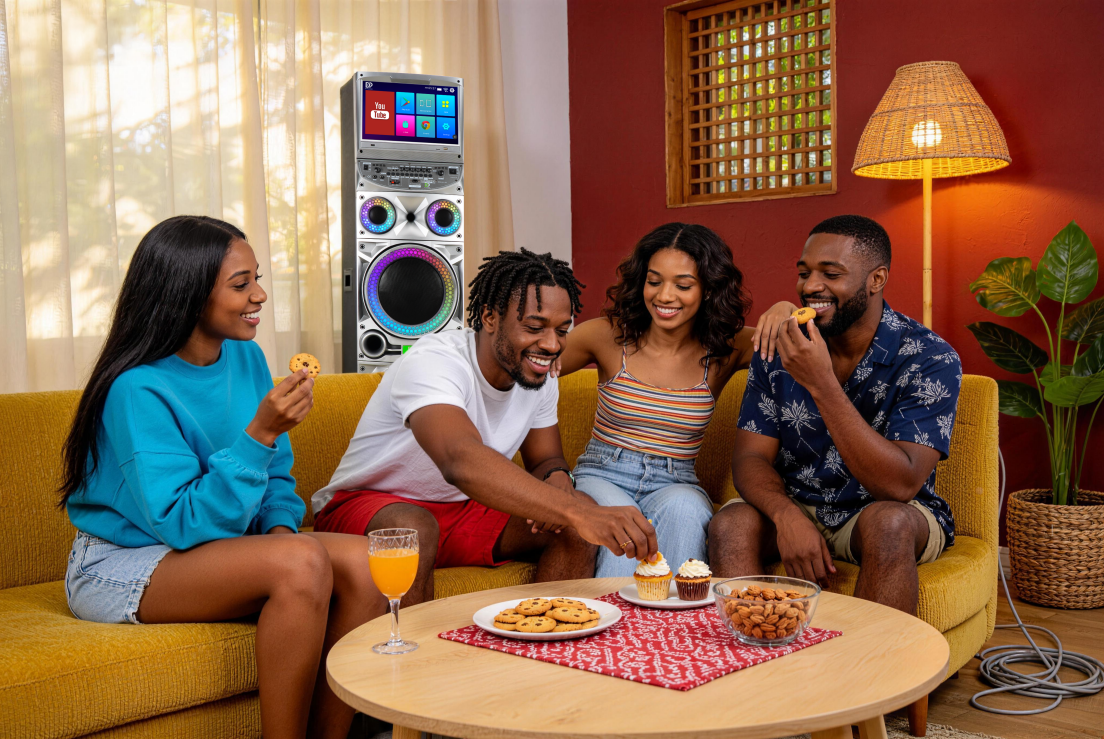
But the reality is that the way families use entertainment products has changed.
In the past, listening to music might have meant one person sitting on the sofa and enjoying it quietly. Today, however, a single speaker may need to meet the different entertainment needs of an entire family.
One person may want to listen to music, another may want to sing, while someone else may want to watch videos. When friends come over, the same speaker may also be expected to quickly transform the living room into a small entertainment space for everyone.
In this context, simply “playing music” is no longer enough to fully meet the needs of modern home entertainment.
We believe one of the most notable changes in today’s home audio products is their evolution from audio output devices into more integrated entertainment terminals.
Take the DIPAOER DP-1422 as an example.
Rather than simply adding a screen to a traditional speaker, it integrates display, online content, music, video, karaoke, and a sound system into a single device.
With a 15.4-inch HD display, online song library, app ecosystem, dual wireless microphones, and integrated audio system, the entire entertainment experience becomes more direct and convenient.
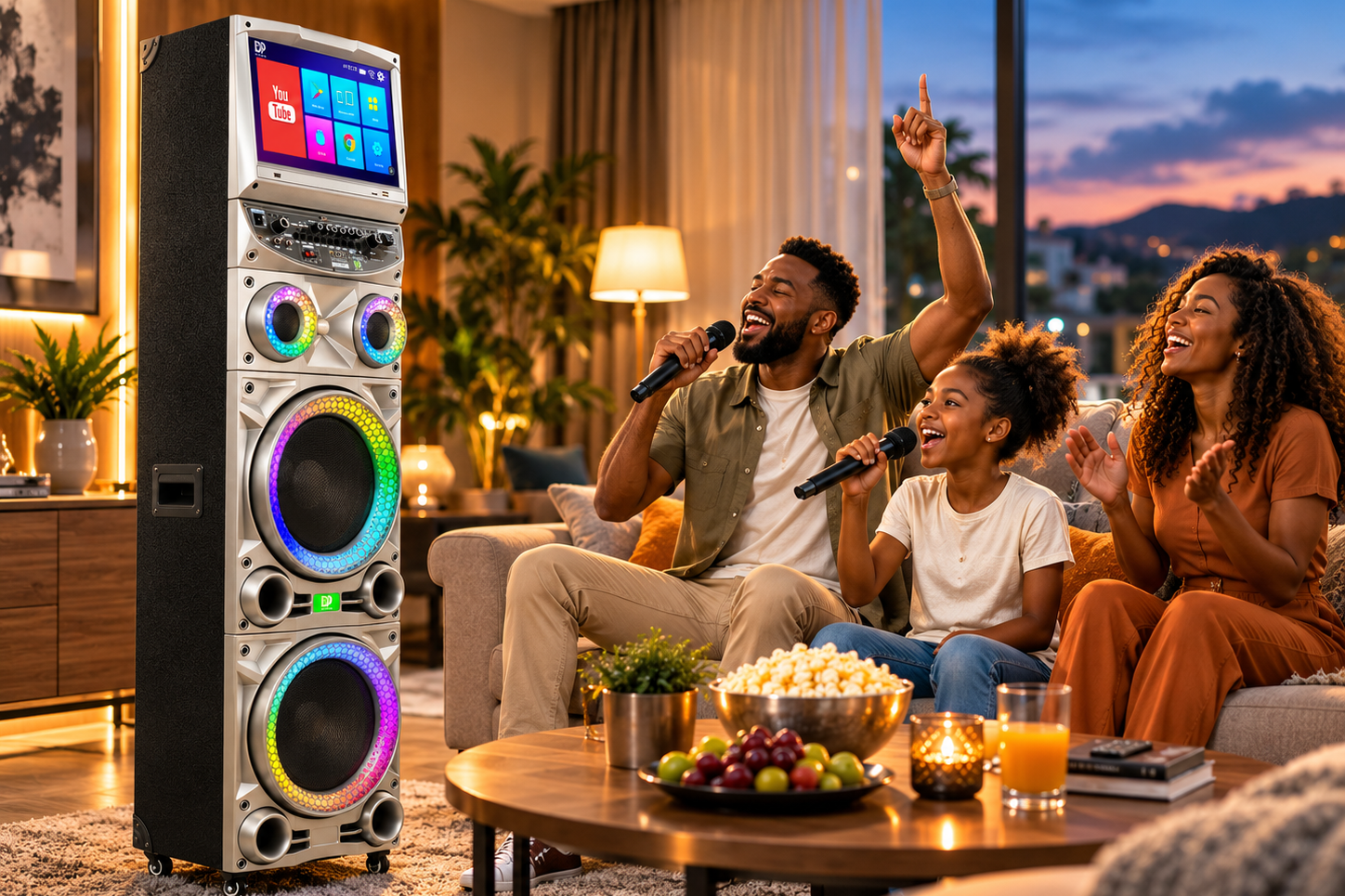
In the past, a home karaoke setup might have required a TV, speakers, microphones, a playback device, and multiple connection cables. Today, many of these functions can be brought together and operated through a single device.
One less device to connect and one less system to switch between may seem like small changes, but they can significantly lower the barrier to enjoying entertainment at home.
For most families, what really determines how often a feature is used is not simply whether it is available, but rather—how easy it is to use whenever you want it.
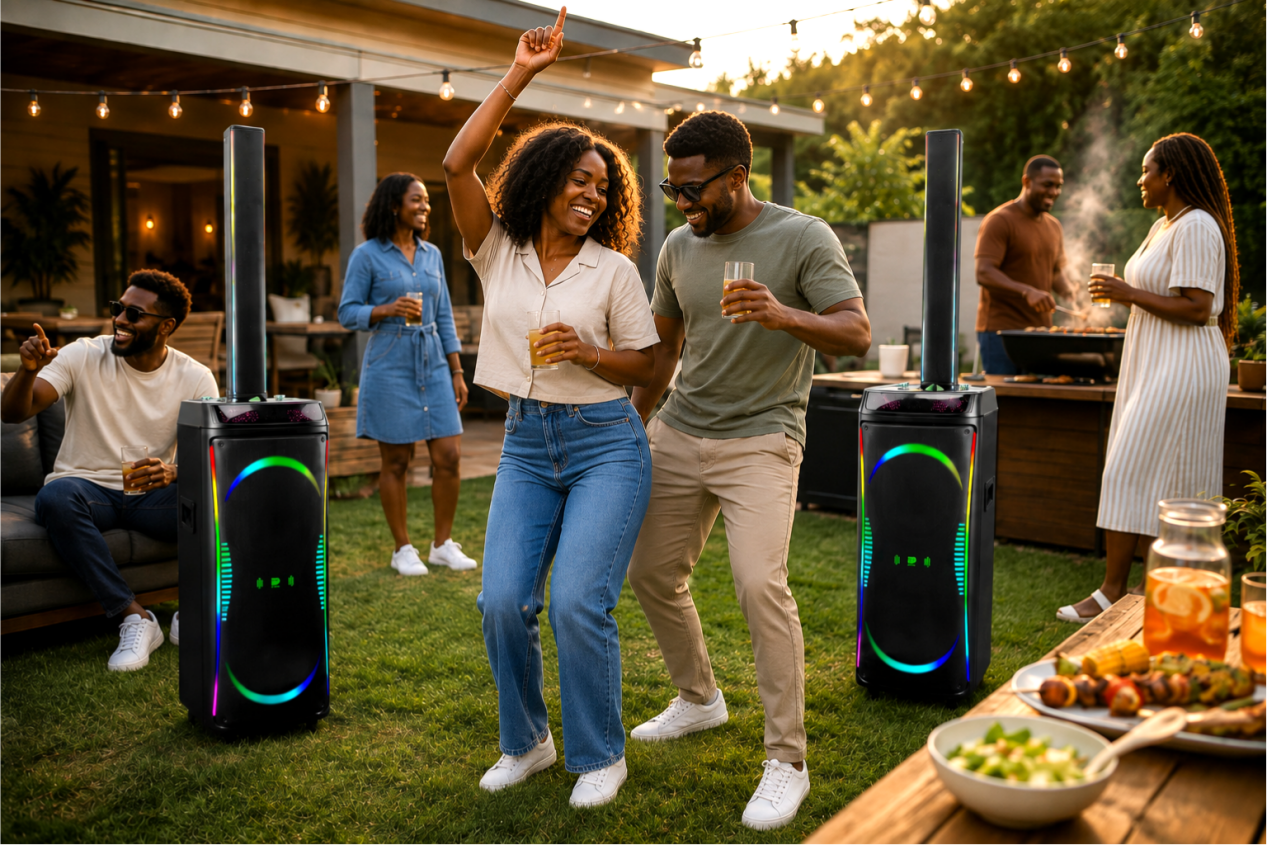
If the DIPAOER DP-1422 represents the integration of home audio-visual entertainment and karaoke, then the DIPAOER DP-1028 addresses another important home entertainment need: gatherings and interaction.
Dinner with friends, family parties, and backyard barbecues all place very different demands on a speaker compared with listening to music alone.
In these situations, sound is no longer just background audio—it needs to cover a larger space. Lighting is no longer simply decorative—it helps create the atmosphere. And microphones are not just for singing—they give more people a way to join in and become part of the entertainment.
This is also why we are placing increasing emphasis on usage scenarios, rather than focusing solely on specifications.
A product may offer 200W of power, and that is certainly a specification worth highlighting. But for users, the more important question is:
Can it make an ordinary gathering more engaging and encourage more people to participate?
Specifications define performance, while scenarios determine practical value. Both are essential.
Over the years, speakers have gained an increasing number of features: Bluetooth, Wi-Fi, displays, lighting effects, microphones, TWS, online content, and more.
But adding more features does not automatically create a better experience.
The real question is whether these technologies ultimately make the product easier to use. Do they reduce the fragmentation between different devices? Can they transform sound from something enjoyed by one person into an entertainment experience that the whole family or a group of friends wants to join?
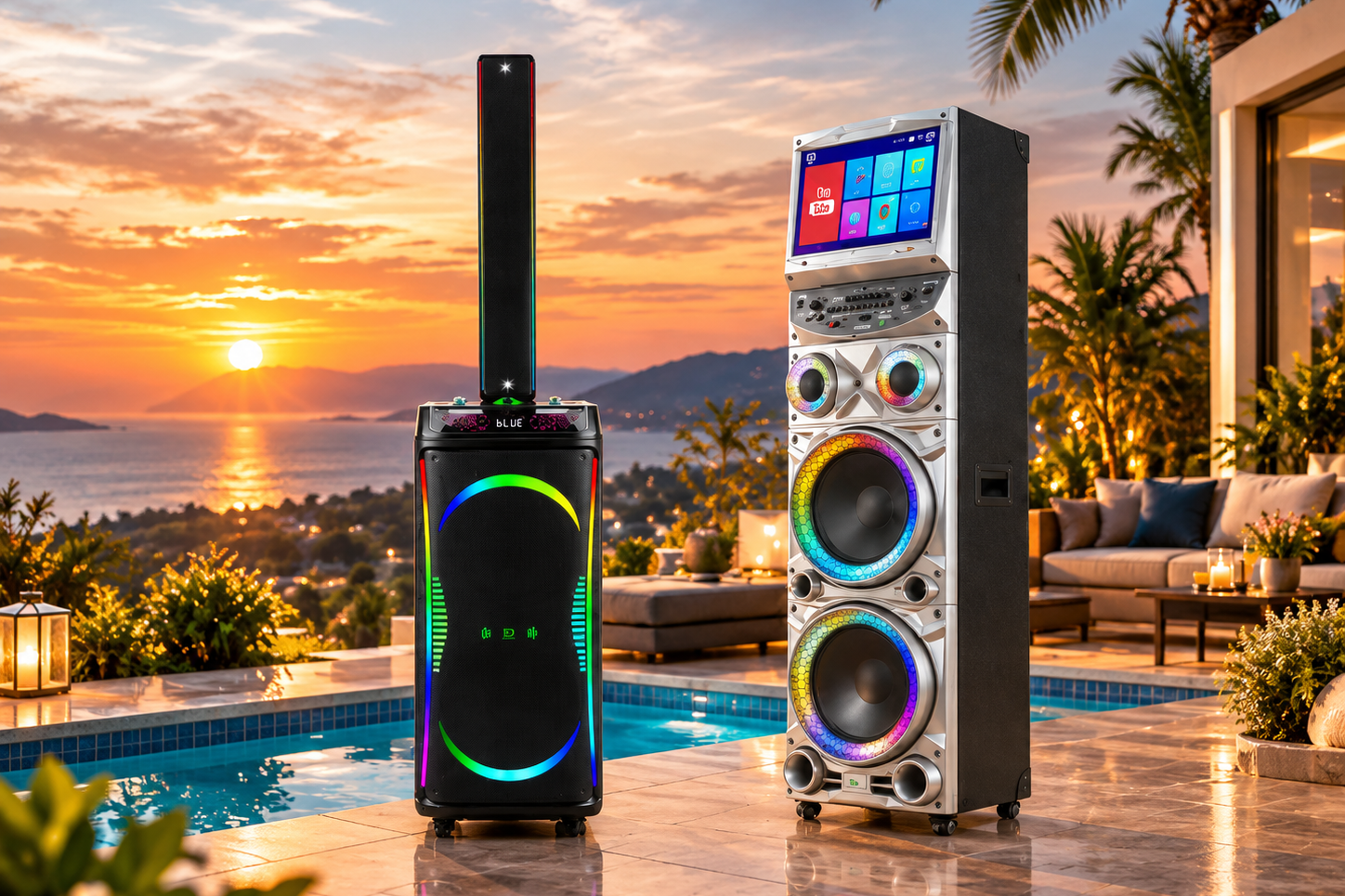
This is also a direction that DIPAOER is placing increasing emphasis on in product development.
We do not simply want to add more features to a speaker. We want sound to become a natural part of more everyday experiences.
From listening to music alone to enjoying karaoke with the whole family;
from playing music in the living room to entertaining friends at a gathering;
from simple audio playback to an experience where music, video, interaction, and atmosphere come together.
The speaker has never moved away from what matters most—sound.
It is simply capable of doing more today.
From playing music to becoming part of home entertainment—this may be one of the most meaningful changes worth paying attention to in the evolution of home speakers.

Copyright © Guangzhou Xinyang Electronic Technology Development Co., Ltd. All Rights Reserved. 粤ICP备2025507395号 Sitemap XML DIPAOER